
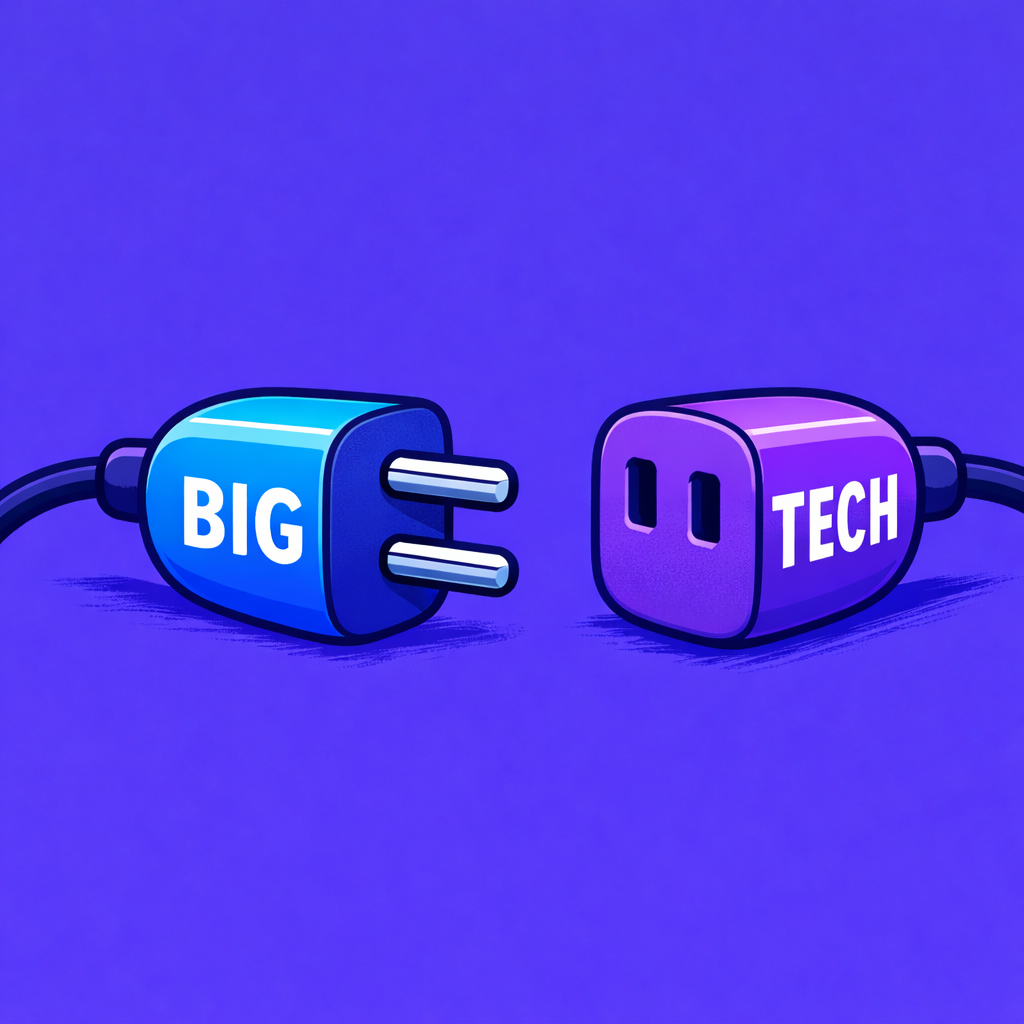
Europe wants less Big Tech. Here’s what that means for video.
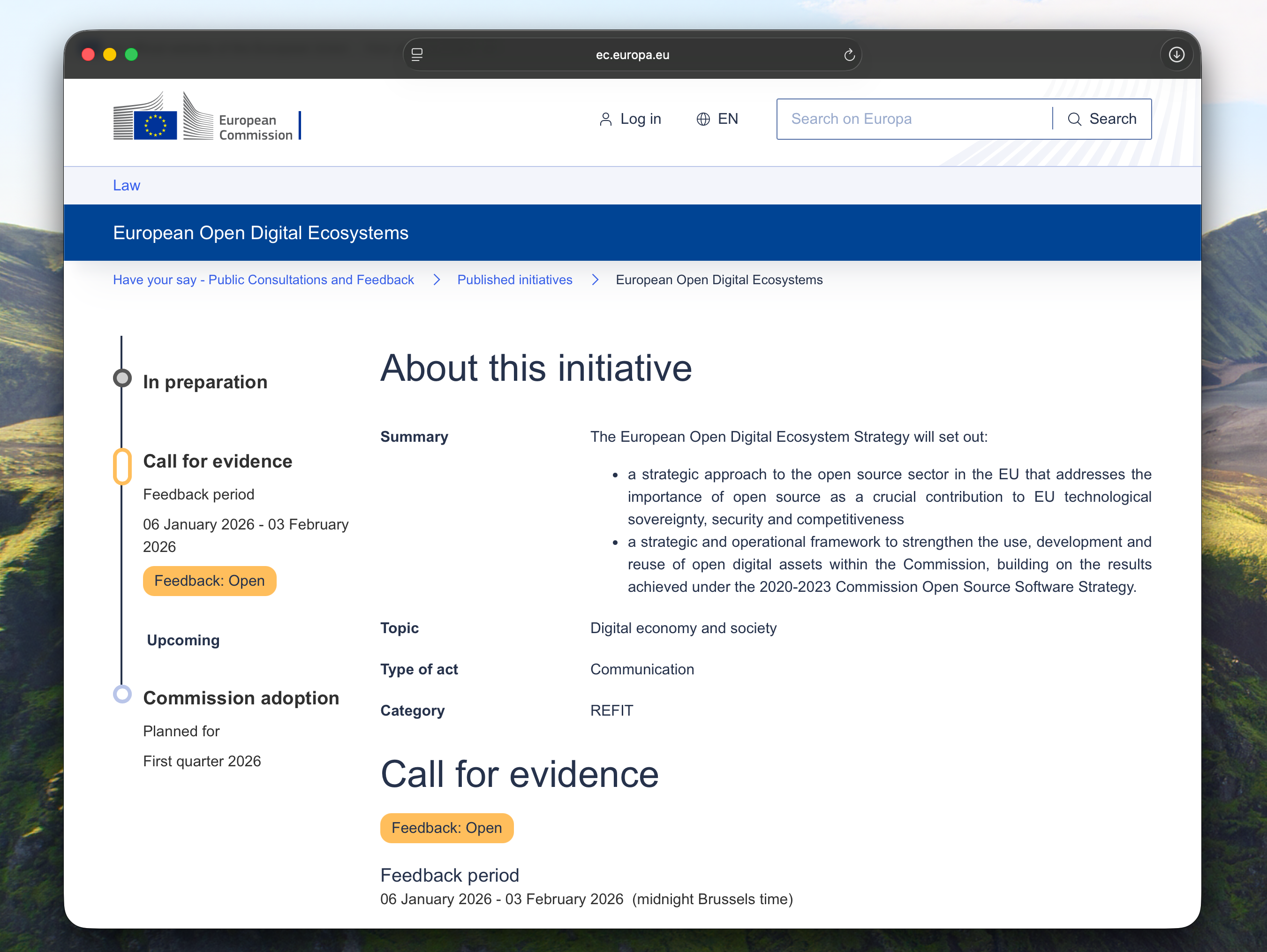
The European Commission has recently opened a call for evidence for a new strategy: Towards European Open Digital Ecosystems.
It may sound abstract. But the message is surprisingly concrete:
Europe wants to reduce its dependence on non-EU software and platforms, and regain control over its digital infrastructure.
For anyone working with video, this is not a distant policy debate. It directly affects everyday decisions: which platform you use, where data flows, and who ultimately controls it.
The problem Europe is calling out
According to the European Commission, the EU has become too dependent on digital technologies from outside Europe. This has clear consequences:
- Less choice for users and organizations
- Reduced competitiveness for European companies
- Increased supply-chain and security risks
- Limited control over data, infrastructure and software stacks
This applies not only to cloud and AI, but also to something as common as online video.
Many organizations rely on video platforms that:
- place cookies
- process IP addresses
- share data with third parties
- fall under non-European legislation
Often unintentionally. But increasingly, this creates friction. Legally, technically and strategically.
From closed platforms to open ecosystems
In its strategy, the Commission highlights the importance of open digital ecosystems.
Open source plays a role in this discussion, but it is not the goal in itself. The real objective is broader: reducing dependency on closed, opaque platforms and restoring control over critical digital infrastructure.
Digital sovereignty does not require every component to be open source. It requires transparency, predictable data flows, and the freedom to choose infrastructure that aligns with European values.
That distinction matters - especially for video.
What this means for video infrastructure
Video has become a core component of digital communication. But the infrastructure behind it is often hard to inspect and tightly coupled to closed ecosystems.
Many video platforms are proprietary, data-intensive, tied to advertising or tracking models, and difficult to audit or fully control.
This increasingly clashes with where Europe is heading: towards transparency, control, and European digital sovereignty.
The implicit message from the Commission is clear: Digital infrastructure, including video, is no longer a side detail. It’s a strategic choice.
From policy to practice: what organizations can do today
This strategy is not legislation, at least not yet. But it clearly signals the direction of travel.
Organizations that want to stay ahead are already asking:
- Where is our video hosted?
- Are cookies or IP data involved?
- Do we truly control this setup?
- Does it align with our privacy policy and European values?
Increasingly, the answer is: this can be simpler.
European video, without compromise
At Mave, we believe video should:
- play smoothly
- require no cookies or trackers
- be fully hosted in Europe
- and give organizations real control
Not as a workaround. But as the default.
Mave is not (yet) a complete open-source project. But it is built for open ecosystems: lightweight, API-first, inspectable, and fully governed by European law - so organizations stay in control.
The discussion the European Commission is opening now confirms what we see every day: European organizations want video, without being locked into external, opaque ecosystems.
Why this call for evidence matters
The Commission is inviting developers, companies, governments and institutions to contribute. That matters.
It shows that digital sovereignty is a shared responsibility, European alternatives are becoming essential, and simplicity, openness and privacy are returning as core principles.
Not in theory, but in practice.
In closing
The question is no longer whether Europe wants to reduce its dependence on Big Tech. That decision has already been made.
The real question is: which infrastructure do you choose today, and does it still make sense tomorrow?